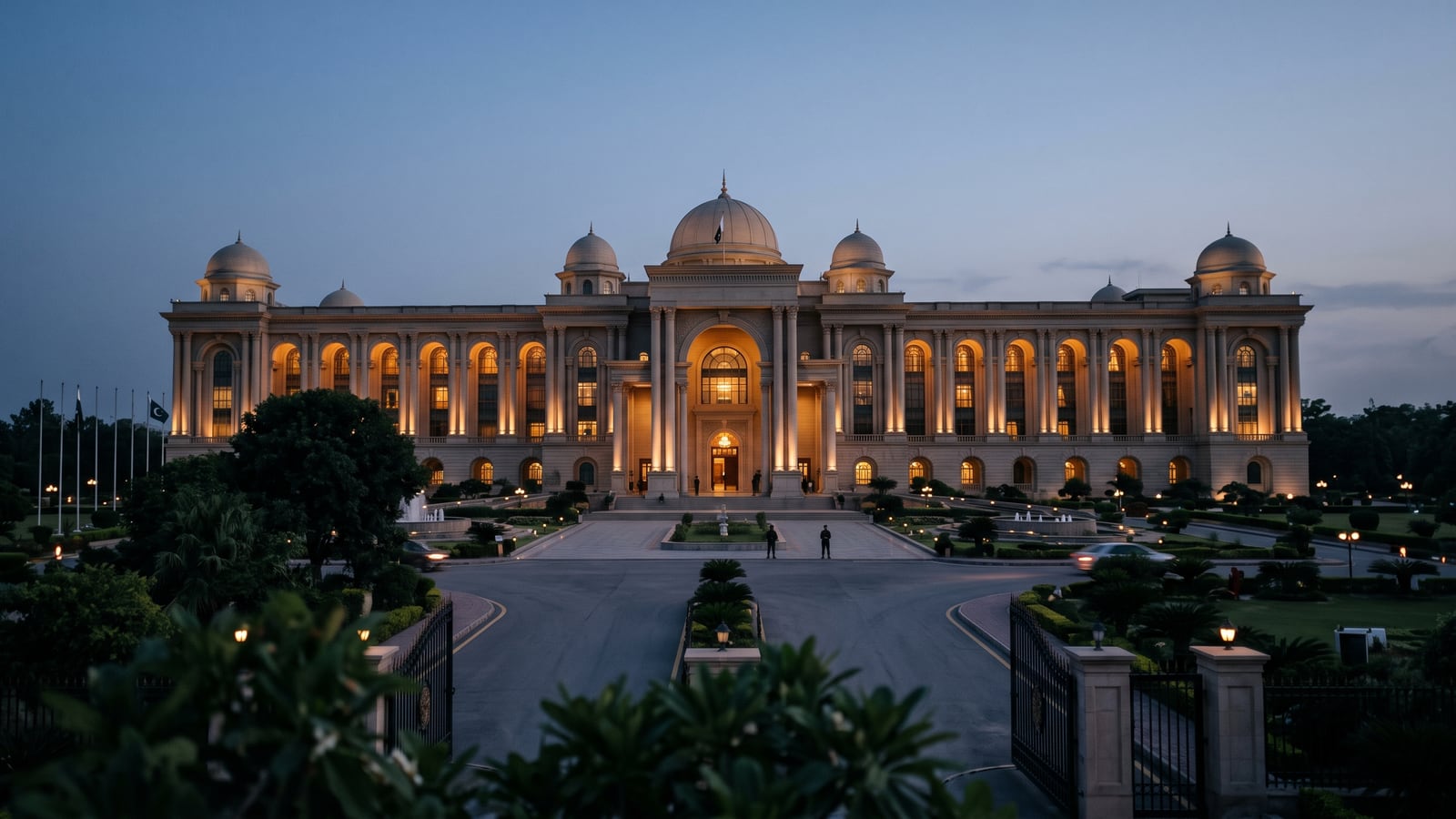
Pakistan's Bitcoin Mining and 2,000 MW Plan Explained
Pakistan's 2,000 MW plan for Bitcoin mining and AI data centres explained: what was announced, IMF concerns, and what it means for builders.
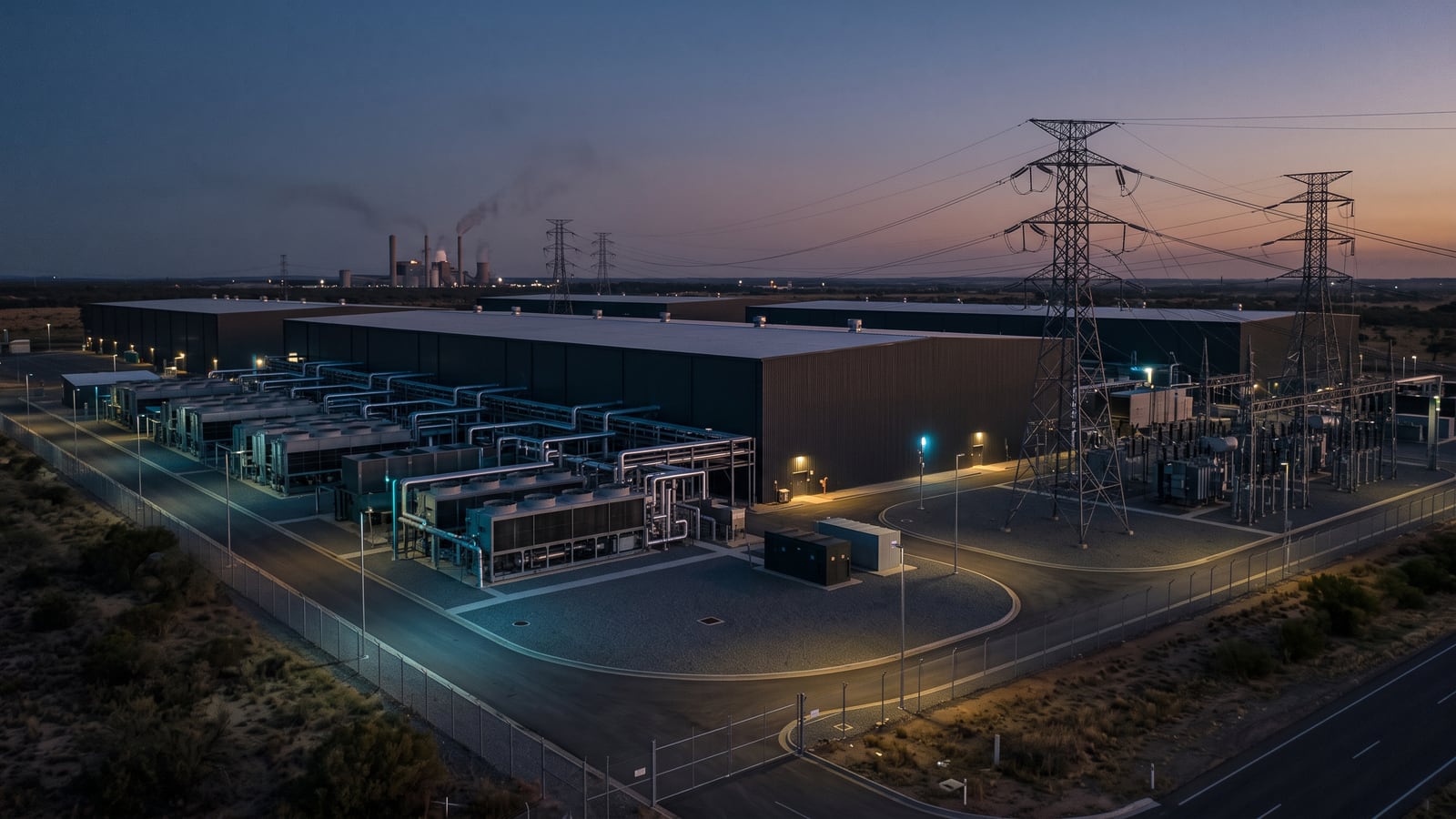 Pakistan's Bitcoin Mining and 2,000 MW Plan Explained
In May 2025, Pakistan's government announced it would allocate 2,000 megawatts (MW) of electricity to Bitcoin mining and AI data centres, using surplus power generation capacity, and days later announced a national Bitcoin strategic reserve. The IMF quickly raised concerns that it had not been consulted and about effects on power tariffs, and later reporting said it pushed back on discounted electricity for miners. As of October 2026, public sources show the policy direction clearly but give little confirmed detail on how much mining is actually running.
Key takeaways
- 26 May 2025: the finance ministry announced 2,000 MW for Bitcoin mining and AI data centres, an initiative led by the Pakistan Crypto Council.
- 28 May 2025: Bilal Bin Saqib, the government's crypto and blockchain lead (reported at the time as Minister of State for Blockchain and Crypto), announced a national Bitcoin strategic reserve at the Bitcoin 2025 conference.
- The stated logic is to monetise underused power capacity, create tech jobs and attract foreign investment.
- The IMF said it was not consulted and flagged concerns about tariffs and resource allocation; a proposal for a discounted tariff was reported to have been rejected.
- Mining-related services are one of PVARA's 10 licence categories under the Virtual Assets Act 2026.
What was announced, in order
| Date | Event | Source type |
|---|---|---|
| 26 May 2025 | Finance ministry announces 2,000 MW allocation for Bitcoin mining and AI data centres, led by the Pakistan Crypto Council | CoinDesk, Bloomberg |
| 28 May 2025 | National Bitcoin strategic reserve announced at Bitcoin 2025 in Las Vegas | CoinDesk, Cointelegraph |
| Early June 2025 | IMF raises concerns that it was not consulted; schedules discussion of the electricity plan | Cointelegraph, citing local reporting |
| July 2025 | IMF reported to have rejected subsidised electricity tariffs for crypto mining and other energy-intensive industries | Reported by crypto news outlets |
| Feb 2026 | Seized state-held Bitcoin reported moved into formal custody as a first reserve governance step | Reported |
| Mar 2026 | Virtual Assets Act 2026 makes PVARA a permanent regulator | TechJuice, The Nation |
| Aug 2026 | PVARA licensing regime launches, including a mining-related services category | TechJuice, The Nation |
On the reserve, Bin Saqib was quoted as saying the national Bitcoin wallet "is not for speculation or hype" and that the government would hold, not sell, its Bitcoin.
Why surplus electricity is the core of the argument
Pakistan has a well-known power sector problem: the country contracted significant generation capacity, much of it under agreements that require capacity payments whether or not the electricity is used. When demand is lower than capacity, the government still pays for the idle plants, and those costs flow into tariffs and the circular debt.
CoinDesk reported that the allocated electricity would come from power plants running far below capacity. The argument is straightforward:
- Idle capacity is already being paid for.
- Bitcoin miners and data centres are large, flexible buyers that can run around the clock or switch off when the grid is stressed.
- Selling that power earns revenue instead of paying for nothing, while attracting foreign investment and technology jobs.
Supporters point to other countries and regions that have used mining as a buyer of last resort for stranded or surplus energy.
Why the IMF objected
Pakistan was negotiating under an IMF programme at the time, and power-sector reform is central to it. Reported IMF concerns included:
- Lack of consultation. The Fund said it was not consulted before the announcement.
- Tariff distortion. Offering cheaper electricity to one industry can shift costs to other consumers or the budget.
- Legal clarity. At the time, crypto's legal status in Pakistan was still unsettled. That changed with the Virtual Assets Act 2026.
In July 2025, outlets reported that the IMF rejected a proposal to offer energy-intensive industries, including crypto mining, a discounted tariff (reported at PKR 22 to 23 per kWh). We could not find an official IMF statement on that specific decision, so treat it as reported.
How Bitcoin mining works, briefly
To understand the policy, it helps to know what miners actually do.
- Proof of work: miners compete to find a number (a nonce) that makes a block's hash fall below a target. Finding it takes enormous numbers of guesses; checking it takes one.
- Rewards: the winning miner earns newly issued Bitcoin plus transaction fees. The new-issuance part halves roughly every four years, so miners rely more on efficiency over time.
- Hardware: modern mining uses specialised chips (ASICs) built only for this task, packed into data-centre style facilities with heavy cooling.
- Difficulty adjustment: the network adjusts how hard blocks are to find so that, on average, one is found about every ten minutes, no matter how much hardware joins.
- Why electricity matters: for most operators, power is the largest ongoing cost. Cheap, reliable electricity decides whether a site is viable.
This is also why miners are attractive to grid operators: they are flexible loads that can be curtailed during peak demand, if contracts allow it.
Mining vs AI data centres: the same plan, different needs
The 2,000 MW was announced for both. They are not the same kind of customer.
| Factor | Bitcoin mining | AI data centres |
|---|---|---|
| Hardware | ASICs | GPUs and accelerators |
| Flexibility | Can switch off at short notice | Prefer constant uptime |
| Connectivity | Modest bandwidth needs | High-bandwidth fibre, low latency |
| Jobs and skills | Operations, electrical, maintenance | Also cloud, ML engineering, networking |
| Revenue link | Tied to Bitcoin price and network difficulty | Tied to compute contracts and demand |
For Pakistan's long-term skills base, AI data centres arguably create more varied technical work, while mining can be deployed faster. DSR's own long-term vision for green data centres is described in "Sustainable Compute: The 2028–2030 Green Data-Center Vision".
Risks and open questions
- Price exposure. Mining revenue swings with the Bitcoin price and network difficulty. A plan that looks viable at one price may not at another.
- Tariff fairness. Who pays if miners get electricity below cost?
- Grid reliability. Large new loads must not worsen load-shedding for households and industry.
- Environmental impact. Much of the surplus capacity is reported to be fossil-fuel based.
- Transparency. Little public data has been released on contracts, operators or actual megawatts in use. We did not find confirmed figures for operating mining capacity as of October 2026.
- Regulation. Mining-related services now fall under PVARA licensing, so operators need to meet its standards.
What this means for builders and students
You do not need to run a mine to work in this space. The skills that mining and data-centre projects need include:
- Monitoring and telemetry: dashboards for hashrate, uptime, temperature and power draw.
- Energy management software: scheduling loads against grid signals and tariffs.
- Compliance and reporting tools: for PVARA licensing, energy regulators and auditors.
- Data analysis: modelling profitability under different price, difficulty and tariff scenarios, honestly showing the downside.
- AI infrastructure: GPU cluster operations, scheduling and inference services if the data-centre side grows.
These are also good final year project and capstone topics. A transparent public dashboard that tracks announced versus confirmed capacity, using only cited sources, would be a useful public-interest project.
Next step with Digital Silk Route
Digital Silk Route (DSR) teaches the technology behind stories like this one, not speculation on them. The Blockchain track of the DSR AI & Crypto Academy runs from Beginner to Intermediate to Advanced, and each level ends with a capstone you can ship, such as a monitoring dashboard or an analytics tool. When your product is ready, you can list it on the DSR Marketplace. Learn. Build. Earn.
Related reading
- Sustainable Compute: The 2028–2030 Green Data-Center Vision
- Pakistan's Virtual Assets Act 2026 Explained for Builders and Startups
- Which Blockchain Should You Build On in 2026? Ethereum, L2s, Solana and More
Sources
- CoinDesk: Pakistan taps surplus power capacity to fuel Bitcoin mining, AI data centers (26 May 2025)
- Bloomberg: Pakistan allocates 2,000-MW capacity to power Bitcoin mining (25 May 2025)
- CoinDesk: Pakistan to establish a Bitcoin strategic reserve (28 May 2025)
- Cointelegraph: Pakistan crypto chief announces Bitcoin strategic reserve
- Cointelegraph: IMF raises concern over Pakistan's Bitcoin mining power plan
- CoinCentral: IMF blocks Pakistan's subsidy plan for Bitcoin mining (reported, 3 Jul 2025)
- Crypto Briefing: Pakistan's crypto chief makes the case for a national Bitcoin reserve (Aug 2026)
- Wikipedia: Pakistan Crypto Council
- TechJuice: PVARA licensing portal and licence categories
- Bitcoin developer documentation: proof of work and difficulty
This article is for education only and is not financial, legal or investment advice.